
Streaks begin in the track
Dirt sitting in frames, tracks and sills runs back onto the pane with the next rain or the next wipe, so those get cleaned first.
Serving Lincoln, Nebraska & surrounding areas
Mon–Fri 8am–6pm · Sat 9am–2pm
Glass and frames in Lincoln, Nebraska
Storefront, entry and office glass cleaned inside and out, including the frames, tracks and sills where streaks and grime actually start.
Glass and frames
Most glass that looks bad has already been washed. The marks come back from somewhere else, which is why this work goes past the obvious surface.
Dirt sitting in frames, tracks and sills runs back onto the pane with the next rain or the next wipe, so those get cleaned first.
Hard water leaves mineral spotting as it dries. Rinse method and drying technique decide whether glass stays clear after a crew leaves.
Glass on a parking lot elevation soils far faster than a sheltered courtyard side, so frequency gets set elevation by elevation.
Quotes are built from how many panes there are and whether each is cleaned inside, outside or both, which is also how you compare bids fairly.
What we clean
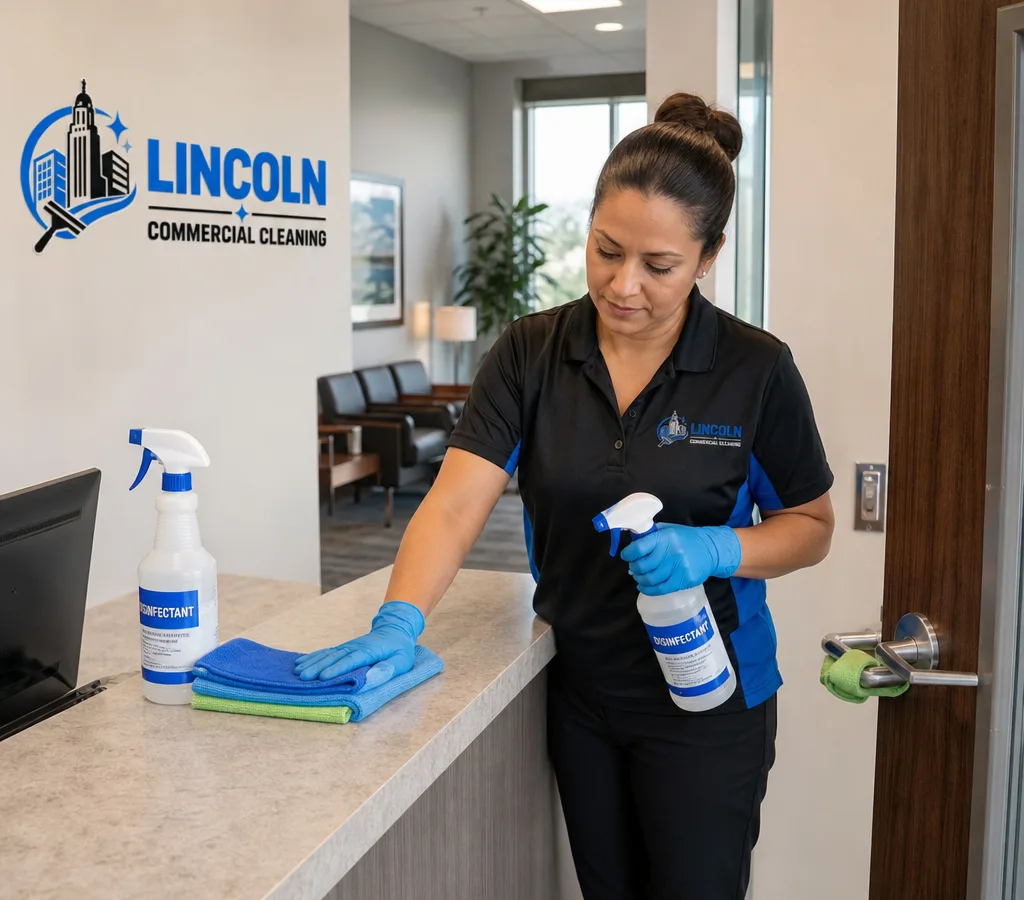
Commercial buildings carry more glass than their windows, and a useful scope names each surface instead of assuming what counts as included.
Ground-level and low-rise exterior panes are washed, squeegeed and detailed at the edges.
Glass every visitor touches takes the heaviest fingerprint and push-plate marking, so it gets priority on a visit.
Conference room walls, office sidelights and glass-fronted reception areas are cleaned on the traffic side and the quiet side both.
Channels, gaskets, mullions and ledges are wiped and cleared so trapped grit stops bleeding back onto clean glass.
Restroom mirrors, display cases and interior glass panels are cleaned with the same streak-free method as the windows.
Overhead and high transom glass is cleaned where access equipment can reach it safely, which is confirmed during the walk.
Storefronts and offices
Glass is the first thing a customer reads about a business, and it shows neglect from farther away than any other surface in the building.
Storefront windows, entry glass and display cases facing a sidewalk, where clear glass is part of whether anyone walks in.
Lobby glazing, elevator lobbies, conference rooms and tenant office fronts, where a whole building gets judged on its common areas.
Visit structure
A window route moves quickly once it is specified, and nearly all of the thinking happens in the counting and the access check beforehand.
We count panes, note which sides are in scope, and confirm what can be reached from the ground, a ladder or a lift.
Each elevation gets a frequency based on exposure and visibility, which keeps you from paying monthly for glass that needs quarterly.
Drop materials go down on interior finishes, signage goes out where a sidewalk or entry is affected, and water access is confirmed.
Panes are washed and squeegeed, frames and sills are wiped, and edges are detailed so the finish does not fail at the perimeter.
Glass is checked from inside and outside in the light available, then the next visit is slotted if you are on a recurring interval.
Complementary work
Clean windows draw attention to whatever sits beneath them, so glass visits tend to get booked with work on the surfaces around them.
Interior glass, mirrors and entry doors can also be written into a janitorial schedule for routine wiping, with the full exterior wash kept as its own visit. That split keeps daily fingerprints handled without paying project rates for them.
Entry floors and lobby hard surfaces are usually the next thing to look tired once the glass is clear, which is floor care territory for scrubbing, refinishing or extraction. Booking the two together means one closure instead of two.
New or remodeled space arrives with stickers, film adhesive and overspray on the glass, and that belongs to post-construction cleaning rather than a routine wash. Buildings needing a wider reset can take glass as part of deep cleaning, and plant or warehouse glazing gets coordinated with industrial cleaning because the access equipment is already on site.
Glass cleaning rates
Glass is quoted per project from a pane count, since two buildings with the same square footage can carry very different amounts of window.
For reference, the deep-cleaning rate on commercial interiors is about $0.20 to $0.60 per square foot, with small office suites often around $250 to $900+. Specialty glass work prices above that range when it involves height access, heavy mineral staining or restoration rather than a routine wash.
The count drives everything else: number of panes, how many sides, the access each elevation needs, frame and track condition, and how soiled the glass is on a first visit. A storefront reachable from the sidewalk and a second-floor elevation needing a lift are not the same job.
For ongoing service, recurring commercial cleaning in Lincoln typically runs about $300 to $1,500+ per month depending on the building and frequency, and a glass interval can be folded into that arrangement. The window work itself is quoted per project after a walkthrough, in writing before it is booked.
Close up
Window results get judged from a few feet away and from across a parking lot, and the perimeter is where a rushed job gives itself away.
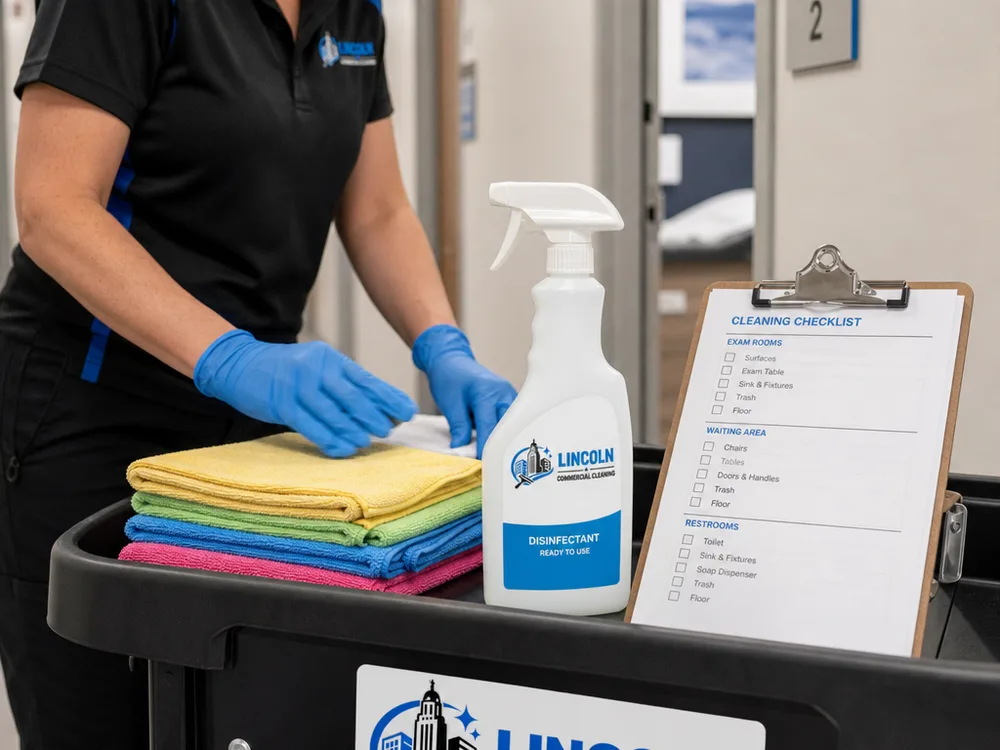
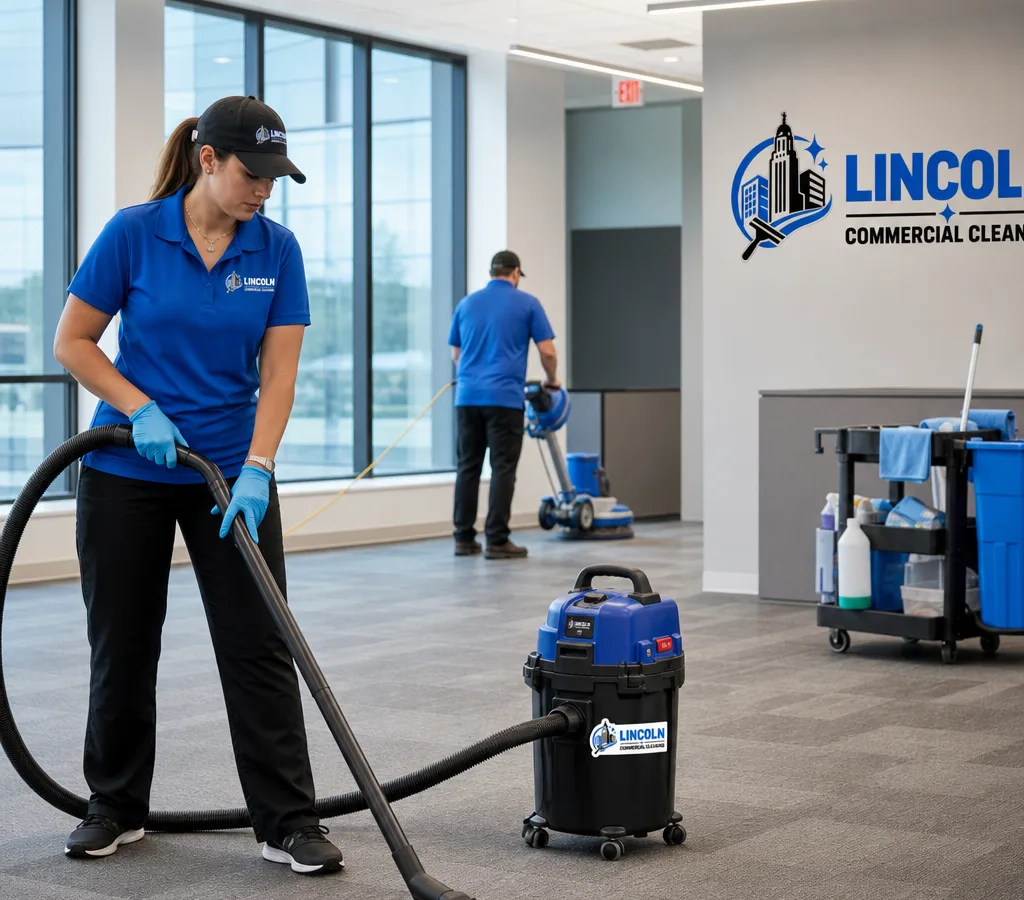
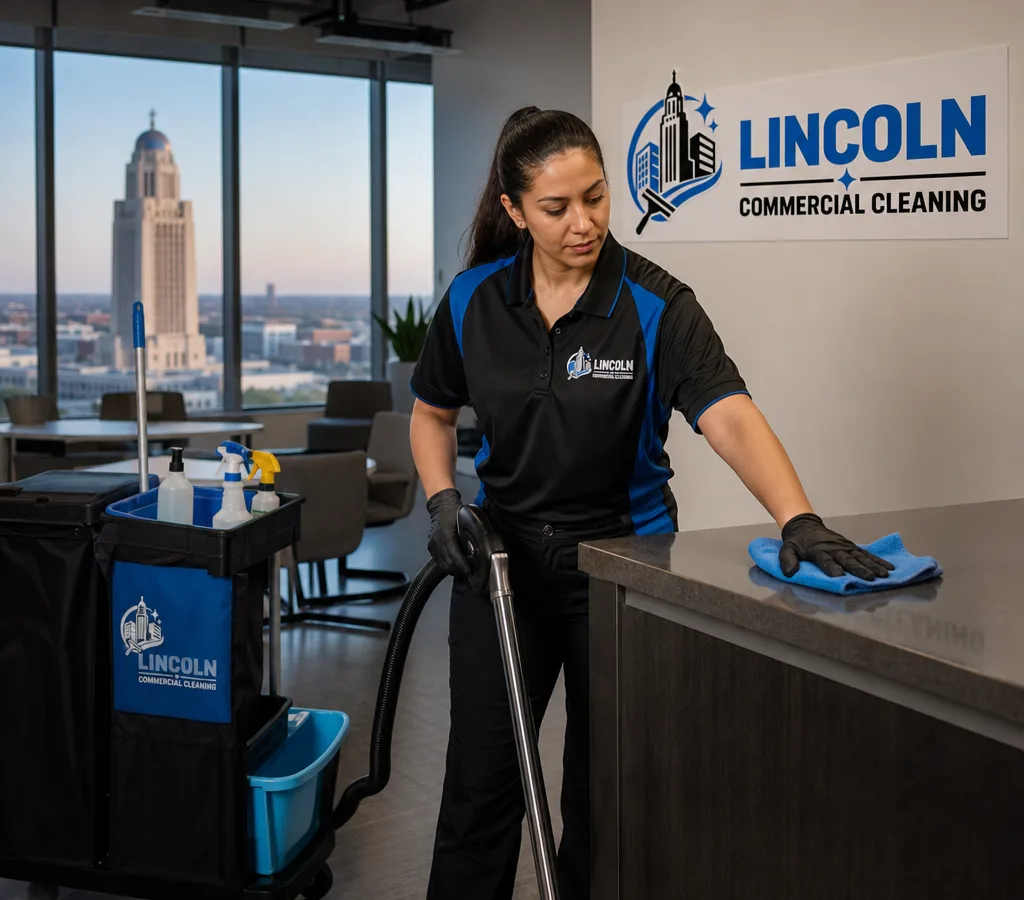
Both sides in one visit is the usual arrangement for storefront and office glass, because the difference only reads when neither side is dirty. Interior access sometimes has to happen separately when offices are occupied or secured. That gets set out in the scope so nobody expects a side that was not quoted.
Questions about glass
Almost every glass quote hinges on two choices: how often each elevation gets washed, and which sides of the glass are inside the scope.
Street-level retail glass often wants monthly attention, because fingerprints and road spray show immediately. Office glass set back from traffic usually holds up on a quarterly interval, and sheltered elevations can go longer. We recommend a frequency per elevation after seeing how the building sits.
Ground-level and low-rise glass is routine work. Higher elevations depend on what a site allows for access equipment and what can be done safely, which gets established during the walk before quoting. Anything past that is noted up front so you know exactly what the price covers.
Light mineral spotting usually clears with the right cleaner and technique. Long-standing deposits can etch the glass surface, and in those cases a restoration treatment is tested on a small area before any commitment. Etching that has gone too far will not polish out, and you will hear that before the work is booked.
Rain on clean glass is mostly cosmetic, since the dirt that causes streaking has already come out of the frames and tracks. Heavy weather on an exposed elevation can still leave spotting, and recurring accounts are generally scheduled with that in mind. Let us know when a visit lands right before an event and timing matters.
Small items can be shifted and replaced, and anything your staff should clear before the crew arrives gets noted. Heavy displays, fixed shelving and merchandised windows are worked around unless moving them is agreed in advance. Retail accounts often schedule before opening for exactly this reason.
Book a glass visit
Tell us roughly how many windows the building has, which elevations matter most, and whether interior access is straightforward. We will count the panes on site, check the reach, and quote a visit or a recurring interval in writing.
Request a quote
Send the building type, approximate size and the areas you want covered. A walkthrough is scheduled next, then a written scope and quote.