
Close-range surfaces
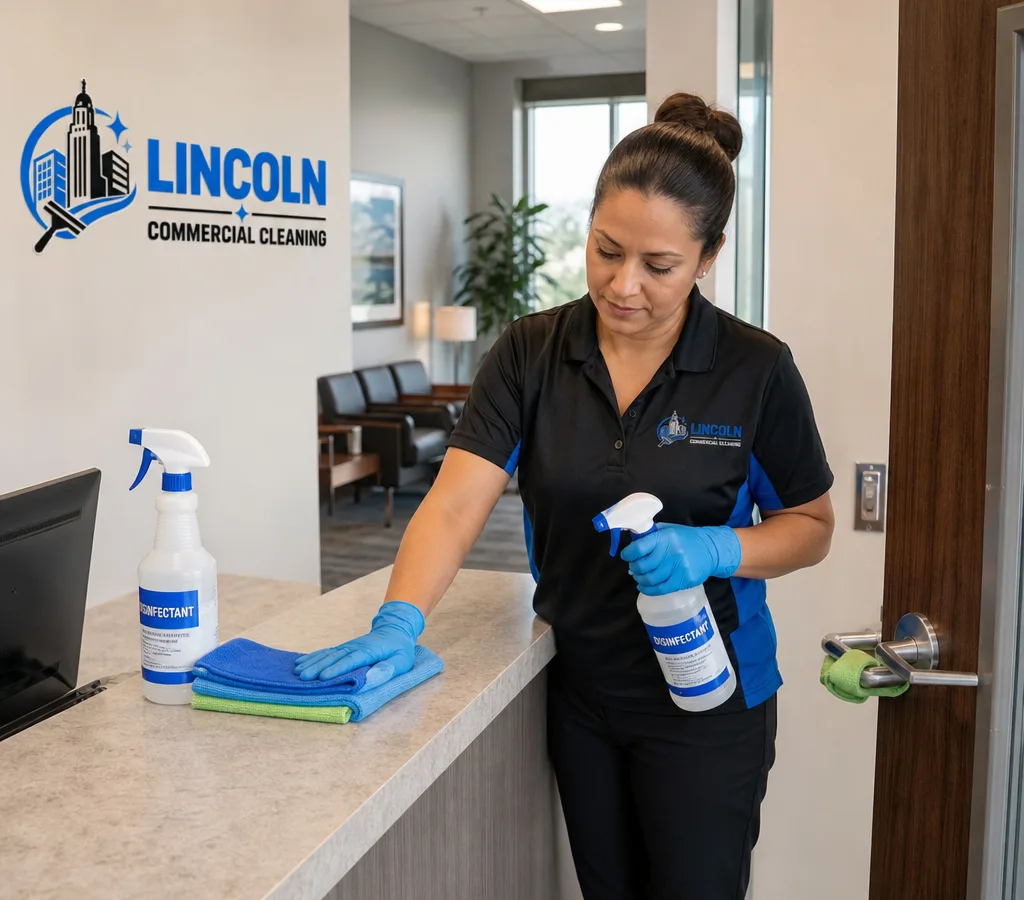
An office gets judged from two feet away, at a desk edge, a monitor base, a phone handset, the arm of a chair. That is the distance a route has to hold up at.
Serving Lincoln, Nebraska & surrounding areas
Mon–Fri 8am–6pm · Sat 9am–2pm
How office work runs in Lincoln, Nebraska
Workplaces cleaned at desk level and restroom level both, on an evening or weekend route your staff never has to work around.
How office work runs
Office soil is light and constant: dust, fingerprints, coffee rings, crumbs. The difficulty is not the work itself, it is holding coverage at close range on every visit.
An office gets judged from two feet away, at a desk edge, a monitor base, a phone handset, the arm of a chair. That is the distance a route has to hold up at.
Conference tables, kitchenette counters, copy rooms and reception seating are used by everyone and owned by nobody, so they drift fastest between visits.
Vents, monitor tops, sills, cable trays, frames and chair backs collect what vacuuming never reaches. That work belongs on a tracked rotation rather than a nightly list.
Badge rules, alarm codes, locked offices and the desks nobody should touch are settled before a first visit, because an office is full of private material.
Desk to restroom
Workplace scopes in Lincoln cover similar ground, written surface by surface so nothing important is left to interpretation on the night a crew is in the building.
Desk surfaces, monitor stands, phones, chair arms and the hard floor or carpet beneath each station are cleaned at the agreed frequency.
Conference tables, credenzas, whiteboard trays, training room chairs and copy room counters are wiped down and reset.
Counters, the sink, microwave and refrigerator fronts, cabinet faces and the floor beneath a table get attention every visit, since food soil here spreads.
Toilets, urinals, sinks, mirrors, partitions, floors and dispensers are serviced and refilled each time we are in the building.
Glass doors, matting, elevator panels, stair rails and corridor floors are cleaned because they set a tone before anyone reaches a desk.
Air vents, baseboards, window sills, high ledges and fabric seating come up on a tracked interval so they never quietly stop happening.
Suites and floors
Lincoln office space ranges from a single suite to a whole floor, and the route changes shape with headcount, visitor flow and how a building controls access.
Law, accounting, insurance, agency and engineering offices, where confidentiality rules shape what gets touched and what gets left alone.
Corridors, shared restrooms, elevator lobbies and stairwells that a property manager answers for even when each suite handles its own interior.
Account startup
Getting an office account running is mostly a matter of settling access and expectations, after which the route becomes something nobody in the building thinks about.
We measure the suite, count restrooms and kitchenettes, note floor types and ask which rooms stay locked.
Every-visit work and rotation work are separated, then matched to headcount, visitor traffic and the days that matter most to you.
Badges, codes, key handling and the people to call after hours are documented, along with any desk or room that sits out of scope.
First visits run the agreed list while a supervisor checks the close-range detail an office is actually judged on.
After a few weeks we compare the scope against what the building is really doing, and change frequency or tasks wherever the fit is wrong.
Office add-ons
An evening route maintains condition, it does not restore it. Carpet, hard floors, glass and a neglected starting point each need a project of their own.
Buildings that have been under-served usually start with deep cleaning, so the route inherits a condition it can actually hold. The standing arrangement itself is described on the janitorial services page, which covers scope, rotation and consumables in more detail.
Carpet extraction, hard floor stripping and recoating belong to floor care, on a cycle set by wear rather than by a calendar. Lobby glazing, office fronts and conference room glass are window cleaning work, usually quarterly or monthly depending on the elevation.
Offices built out or reconfigured need post-construction cleaning before anyone moves back in, and a clinic or therapy suite inside an office building follows the medical office cleaning plan instead. Mixed portfolios are handled under the general commercial cleaning service.
Office cleaning budgets
Office work is ongoing service, so budgets get set as a monthly amount or a per-visit rate, and visit frequency is what ties one figure to the other.
Scheduled commercial cleaning in Lincoln is usually $300 to $1,500+ monthly, with position in that range set by floor area and visit frequency. Weekly service for a small suite often falls around $150 to $400 for each visit, and a larger workplace carrying several restrooms, a breakroom and heavier traffic runs $500 to $1,200+ per visit.
Headcount matters as much as area. Desk density, how many kitchenettes and restrooms there are, carpet versus hard floor, whether the building is accessible after hours, and the condition on day one all shift a quote inside that range.
Two levers move the number after that. Frequency is the larger one, since each extra visit a week adds hours; the task list is the other, with day porter coverage, interior glass or periodic floor machine work priced on top. The figure is confirmed in writing once the walkthrough is done.
Around the workplace
Nobody checks an office ceiling. People notice a smeared glass door, a dusty vent above a desk, and the state of the kitchenette sink on a Monday morning.
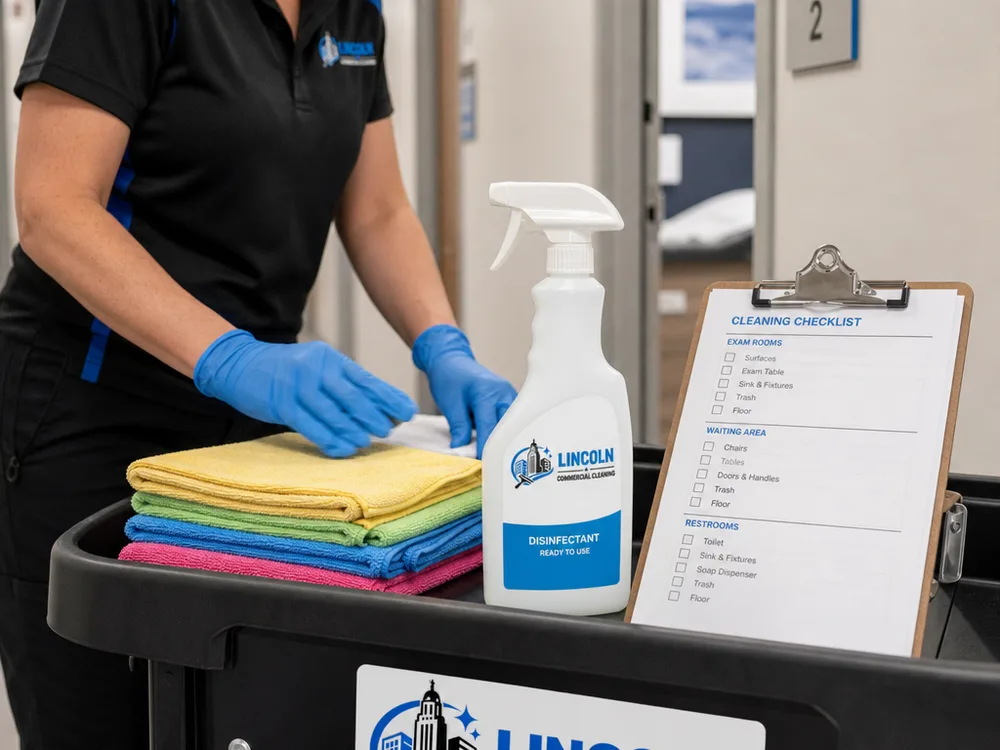
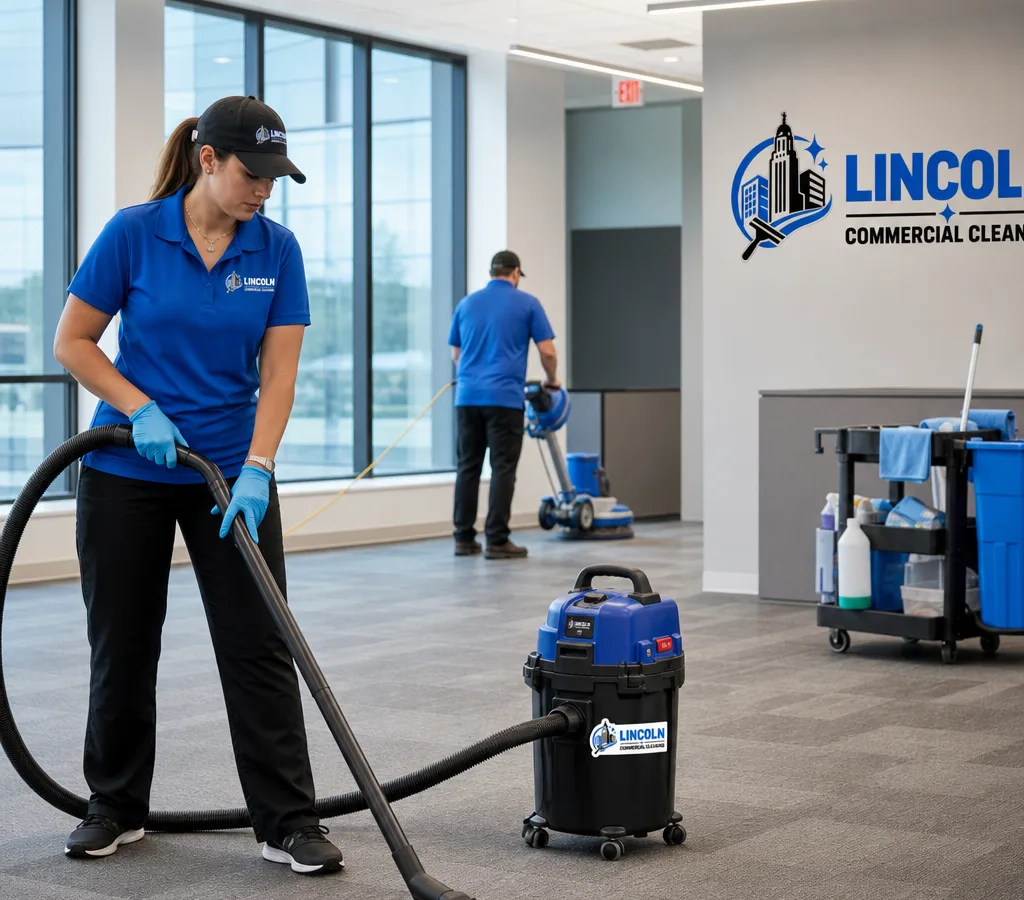

Desk surfaces are wiped where they are clear, and anything covered in paperwork is left untouched rather than moved. Staff who want a full desk clean can leave the surface empty on service nights, and that convention gets explained once to the building. Rooms or desks that should never be entered are listed in the scope.
Before you sign
Comparing office bids is difficult because rival quotes rarely describe the same work, so these answers deal with what usually differs between them.
Headcount and visitor flow matter more than floor area. A quiet professional suite is often fine with one or two visits a week, while an office with public restrooms, a busy kitchenette and forty people at desks generally wants nightly service. A frequency gets recommended at the walk and revisited after the first month.
Evenings and overnight are the usual choice, since desks, meeting rooms and corridors all need to be empty. Entry arrangements get documented before anyone starts: who holds keys, how the alarm is handled, which suites stay locked. Early morning routes work for buildings that cannot be opened at night.
Paperwork is never moved, stacked or sorted, and surfaces under documents are left alone rather than cleared. Crews work to a rule of cleaning around documents instead of relocating them. Rooms holding client files or server equipment can be excluded, or serviced only with a staff escort.
Dispenser stock can sit on either side of the agreement: we supply soap, paper and liners, or you buy them and we track levels. Either way dispensers are checked on every visit so nothing runs out mid-week. Offices tied to a particular brand or dispenser system can have that written in.
Service drifts when a building changes and the scope does not, so a periodic review of the task list is part of the arrangement. Anything specific gets fixed on the following visit once you flag it. Where the same area keeps coming up, frequency or scope is usually the cause, and we would rather reopen that than paper over it.
Set up office service
Send us the suite size, the headcount and the hours the building keeps. We will walk it, write a scope against how the space is actually used, and quote a frequency in writing.
Request a quote
Send the building type, approximate size and the areas you want covered. A walkthrough is scheduled next, then a written scope and quote.