
Touch points everywhere
Door handles, light switches, desk tops, cubby fronts, railings, drinking fountains and shared toys get contact from hundreds of hands a day.
Serving Lincoln, Nebraska & surrounding areas
Mon–Fri 8am–6pm · Sat 9am–2pm
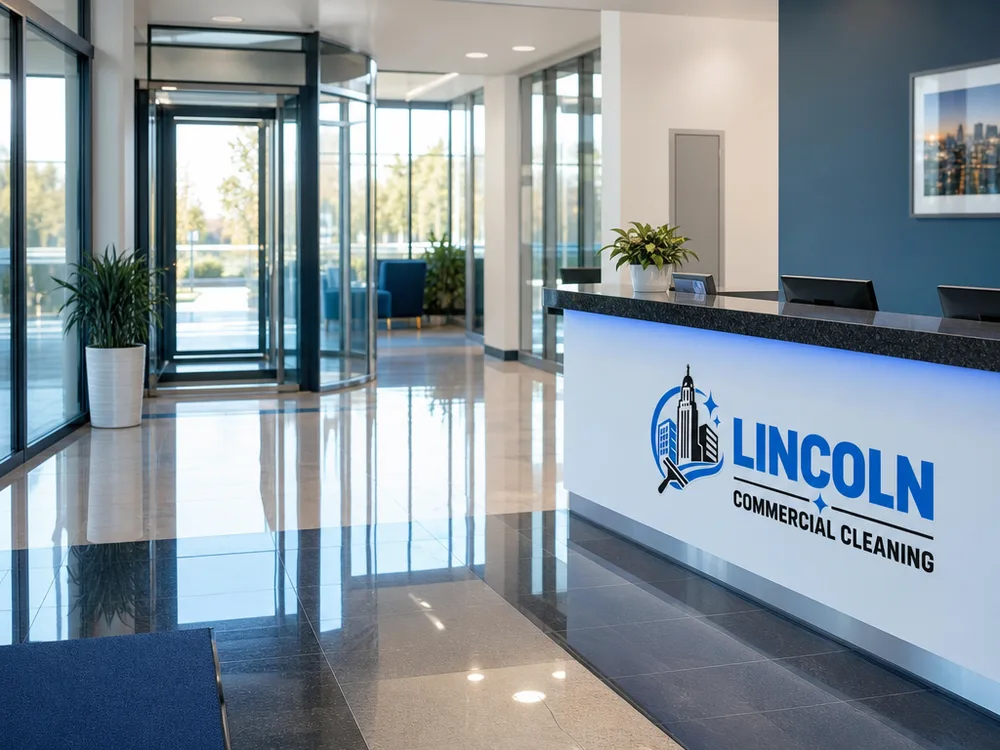
Classrooms and corridors in Lincoln, Nebraska
Classrooms, cafeterias, gyms and restrooms cleaned on a calendar built around your school day, your breaks and your summer.
Classrooms and corridors
Education buildings carry heavy traffic from small hands, then empty completely for weeks at a time. Both patterns belong in the cleaning plan.
Door handles, light switches, desk tops, cubby fronts, railings, drinking fountains and shared toys get contact from hundreds of hands a day.
Soil in a classroom or a daycare room concentrates low: chair legs, table undersides, floor corners, the bottom of a cabinet door.
Nightly work keeps a building usable, while winter break, spring break and summer are when floors, upholstery and whole-room resets actually fit.
A cafeteria floor takes spills and dropped food, a gym floor takes a finish and a sport, and neither is treated like a corridor.
Campus task list
Buildings range from a two-room childcare center to a full campus, and a scope is written per site around the rooms in use and the ages they serve.
Desks, tables, chairs, cubbies, counters and floors are cleaned after the day ends, with trash pulled and surfaces left clear.
Handles, switches, push bars, railings, fountain surrounds and shared equipment are wiped each visit with products matched to the surface.
Fixtures, partitions, floors, mirrors and dispensers are serviced, including the low sinks and changing surfaces in early-childhood rooms.
Tables, bench seats, serving line exteriors, floors and the space under fixed furniture are cleaned after service each day.
Floors are dust mopped and damp cleaned with the finish in mind, and mats, bleacher edges and equipment storage are included on a rotation.
Lockers, matting, stair treads, railings and corridor floors are cleaned nightly, because they carry the whole building's traffic.
Programs and grade levels
Age changes the work more than size does, since a toddler room and a high school corridor collect different soil at different heights on entirely different schedules.
Play rooms, nap areas, low sinks, changing surfaces and toy storage, where cleaning happens at floor level and after small children have gone home.
Classrooms, gyms, cafeterias, locker bays and shared restrooms across a larger footprint, with break weeks available for the heavier work.
Term calendar planning
School cleaning runs on a nightly route through the term alongside project work booked into the breaks. The plan is written once and holds for a year.
Your facilities contact takes us through the building, and we note room counts, floor types, gym finishes and the areas with the worst traffic.
Term-time tasks are set room by room, with timing that starts after dismissal and after any after-school program clears.
Floor refinishing, upholstery and whole-room resets are placed into winter, spring and summer windows while the calendar is still open.
Building access, sign-in procedure, staff identification and the rooms requiring an escort are agreed before a first visit.
Each break is also a review point, where the task list gets adjusted for room changes, enrollment and whatever the last term exposed.
Campus projects
Most of what a school needs beyond nightly service fits into the weeks a building is empty, and booking those slots early is what makes them happen.
Gym floors, cafeteria tile and corridor surfaces are floor care work: stripping, refinishing, scrubbing and extraction, all needing cure time that only a break provides. Carpet in classrooms and libraries runs on the same cycle.
A building coming off a stretch of inconsistent service benefits from deep cleaning before the nightly route begins, so the schedule starts from a known condition. The route itself is described on the janitorial services page.
Classroom glass, entry doors and interior partitions are handled by window cleaning, usually once a term. Summer construction and remodeling leave dust that needs post-construction cleaning before rooms are set up, and a campus health office follows the medical office cleaning plan instead of the classroom scope.
School cleaning budgets
Education buildings are priced as recurring service, with a monthly figure through the term and break projects quoted on their own after a walkthrough.
Ongoing cleaning on this site is published at about $300 to $1,500+ per month, placed in that range by building size and how many visits a week it takes. A small childcare center on a weekly visit often runs $150 to $400 each time, while a larger building with multiple restrooms, a staff breakroom and heavy traffic lands at $500 to $1,200+ per visit.
Room count, enrollment and how late the building stays occupied move a school quote most. Gym finish, cafeteria square footage, the number of low sinks and changing areas, and whether after-school programs push the start time later all matter.
Break-week floor refinishing and whole-room resets are quoted separately after the walkthrough, since they fall outside the nightly unit. A written quote covering both the term route and the break plan is the usual way a school year gets budgeted.
Down the hallway
A school is judged at its entry, in its restrooms and along a corridor floor. Those are the surfaces a visiting parent walks past without being asked to look.
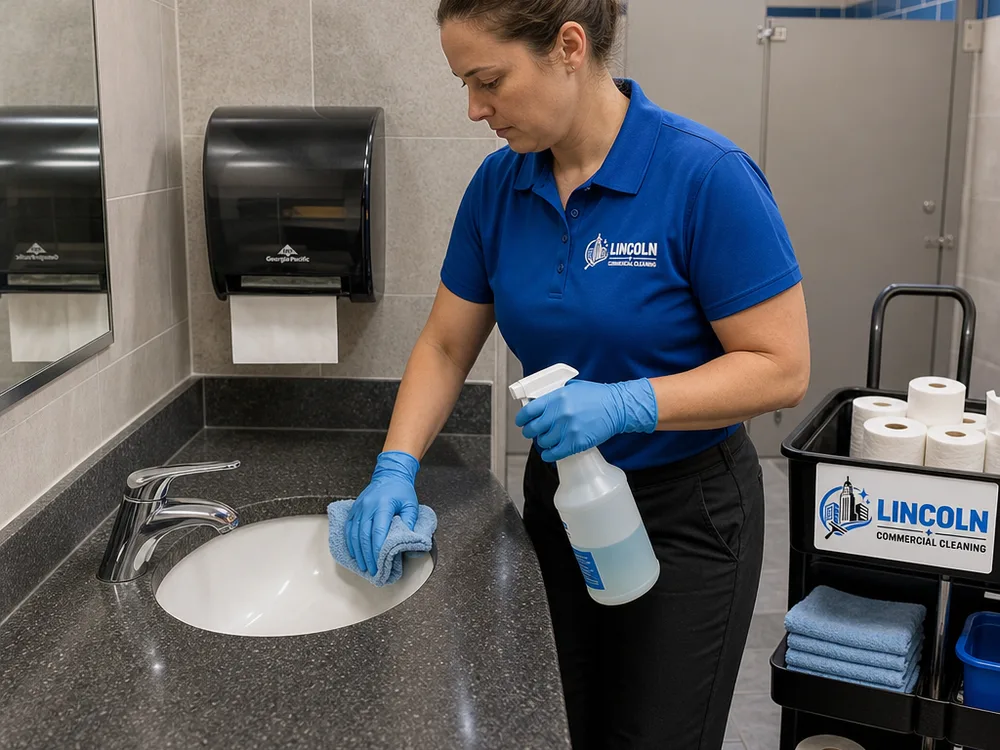
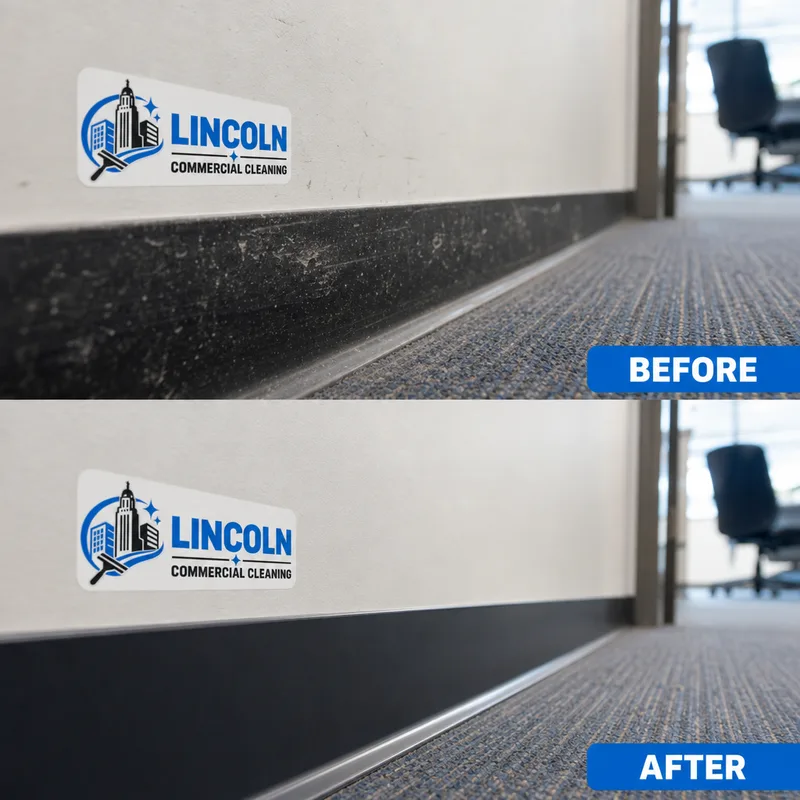

Routine work is scheduled after dismissal and after any after-school program has cleared, so rooms are empty. Daytime presence is limited to restroom checks and spill response where a school asks for it, with sign-in and identification handled your way. Products and equipment are kept secured and out of reach at all times.
Administrator questions
Principals, directors and facilities staff tend to raise much the same points, and nearly all of them come back to timing, access and what happens over a break.
After the last bell, and after any after-school care or athletics clears the areas involved. A building with evening activities often gets split: rooms that empty early are cleaned first, and the gym or cafeteria is picked up later. The sequence is written into the route so it is the same every night.
Handles, switches, rails, fountain surrounds, desk tops and shared equipment are wiped on every visit with products chosen for the material. Early-childhood rooms get the same attention at child height, including table undersides and cubby fronts. The list of surfaces and the frequency are set out in the scope rather than left general.
Breaks are for work that cannot happen around children: floor stripping and refinishing, carpet extraction, upholstery, high dusting and full-room resets. The plan is set before the year starts so crews and equipment are reserved for the right weeks. Summer usually carries the largest block of it.
Products are chosen for the surface and used at label dilution, with equipment and containers kept secured and away from rooms in use. Centers with a required product list can have those items written into the scope instead. What we will not do is make a claim about illness or standards, since what we provide is cleaning, written down task by task.
Both fit a nightly route for daily cleaning: dust mopping, damp cleaning, tables, bench seats and spot work. Heavier treatment on a gym finish or cafeteria grout is break work, because it needs closure and cure time. The split between nightly and periodic is agreed at the walk.
Book a campus walk
Share the room count, the dismissal time and your break calendar. We will walk the building with your facilities contact, write a term route, and quote the break projects alongside it.
Request a quote
Send the building type, approximate size and the areas you want covered. A walkthrough is scheduled next, then a written scope and quote.