
Hair goes where air goes
Clippings end up along baseboards, under station bases, in floor corners, behind mirrors and inside the wheels of a stylist chair.
Serving Lincoln, Nebraska & surrounding areas
Mon–Fri 8am–6pm · Sat 9am–2pm
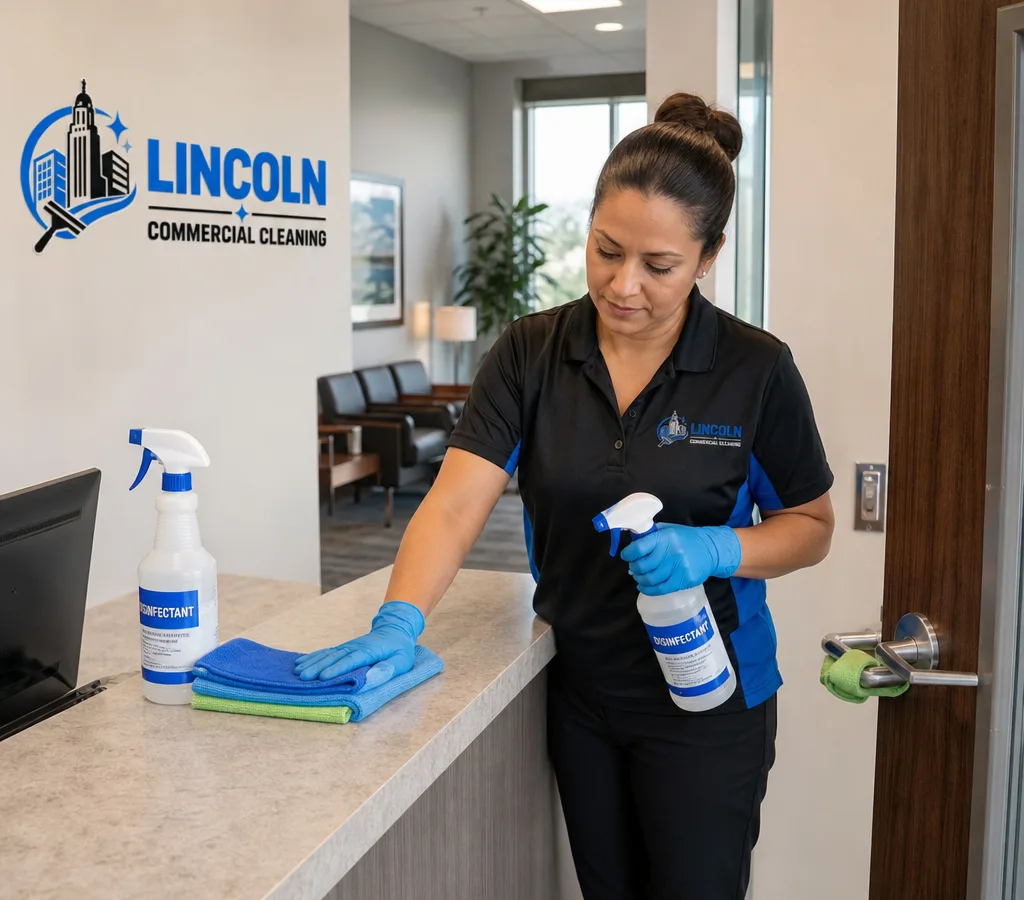
Chairs and treatment rooms in Lincoln, Nebraska
Styling floors, treatment rooms and reception areas cleaned between your days, with attention to the hair and product residue that builds up on every surface.
Chairs and treatment rooms
Salons generate soil nothing else does: hair that travels everywhere, plus a film of product that settles onto every surface in the room.
Clippings end up along baseboards, under station bases, in floor corners, behind mirrors and inside the wheels of a stylist chair.
Hairspray, powders, oils, wax and nail dust settle onto counters, mirror frames, light fixtures, shelving and the floor as a sticky layer that needs a degreaser, not a wipe.
Shampoo bowls, surrounds, pedicure stations and wet room floors hold moisture, so those surfaces and the grout around them are cleaned and dried on every visit.
In a treatment room, a client is on their back staring at a ceiling, a vent, a light fixture and a shelf edge for an hour.
Through the salon
Studios differ widely in services offered, so scopes are written per site around the stations, rooms and wet areas that are actually in use.
Hair is swept and vacuumed from the open floor, the station bases, the baseboards and the corners where clippings settle.
Counters, mirror glass and frames, drawer fronts, chair bases and chair arms are cleaned of product film and fingerprints.
Bowls, surrounds, faucets, backwash chair bases, floors and grout are cleaned and dried, with product build-up removed rather than rinsed around.
Tables, trolleys, shelf edges, light fixtures, vents in view of a reclined client and the floor are cleaned and the room reset.
Desk, seating, product shelving, display glass, entry door and the waiting area floor are cleaned, since that is where a client first stops.
Fixtures, mirrors, floors, dispensers, laundry areas, break space and trash handling are serviced on every visit.
Studios served
From a one-room studio to a multi-station salon with a spa wing, the work follows the services offered more than the square footage of the suite.
Styling floors, shampoo areas, color stations and retail shelving, where clipping and product residue drive the whole task list.
Massage and facial rooms, pedicure and manicure stations, wet rooms and quiet areas, where a reset between client days is the main requirement.
Between client days
Salons book clients tightly, so a visit lands either after the last appointment or before the first, with the day a studio closes often doing the heaviest work.
Stations, wet areas, treatment rooms and retail space all get looked at, which is how we find where hair and product residue collect.
Surfaces get matched to products that lift residue without harming mirrors, counters, trolleys or treatment furniture.
Entry arrangements and the quiet window are set, whether that is after the last client, early morning, or a closed day.
Floors and stations are worked first, then wet areas, then treatment rooms and reception, so damp surfaces have time to dry before opening.
Once it is clear where residue returns fastest, the frequency or the rotation changes to match it.
Studio projects
Residue and moisture are cumulative, so even a well-kept studio needs periodic project work on the floors, the grout and the glass that a route cannot reach.
Hard floors around styling chairs and in wet areas take product build-up into the finish and the grout, and floor care handles the stripping, refinishing, grout agitation and sealing that resets them. Carpet in a reception or quiet room runs on an extraction cycle.
Street-facing glass, entry doors and retail display cases are window cleaning work, and a salon with a window display usually wants a short interval. The underlying recurring arrangement is covered on the janitorial services page, and a studio behind on upkeep tends to open with deep cleaning.
A new suite or a station rebuild leaves construction dust that post-construction cleaning clears before clients return. Where a studio offers medical aesthetic or clinical services in a dedicated room, the medical office cleaning plan covers that space instead of this scope, and a multi-location owner can hold everything under general commercial cleaning.
Salon cleaning costs
Studios are recurring accounts, so pricing comes as a monthly figure with a per-visit rate, and most salons sit at the lower end because the suites are small.
Published recurring rates run from about $300 to $1,500+ monthly, set by suite size and visit count. A small studio cleaned weekly generally falls in the $150 to $400 per-visit band, while a larger salon with several restrooms, a breakroom and steady client flow is quoted at $500 to $1,200+ per visit.
Station count and service mix drive a salon quote. Chairs, shampoo bowls, treatment rooms, wet areas, how much hard floor there is versus carpet, and whether color and nail services are offered all change the hours a visit takes.
Grout restoration in a wet area and floor refinishing are quoted separately after the walkthrough, because they sit outside a recurring visit. The monthly figure is confirmed in writing once the rooms and frequency are agreed.
Around the chair
Clients sit still for an hour, facing a mirror or a ceiling, which makes a salon one of the few buildings inspected closely by the people paying for it.
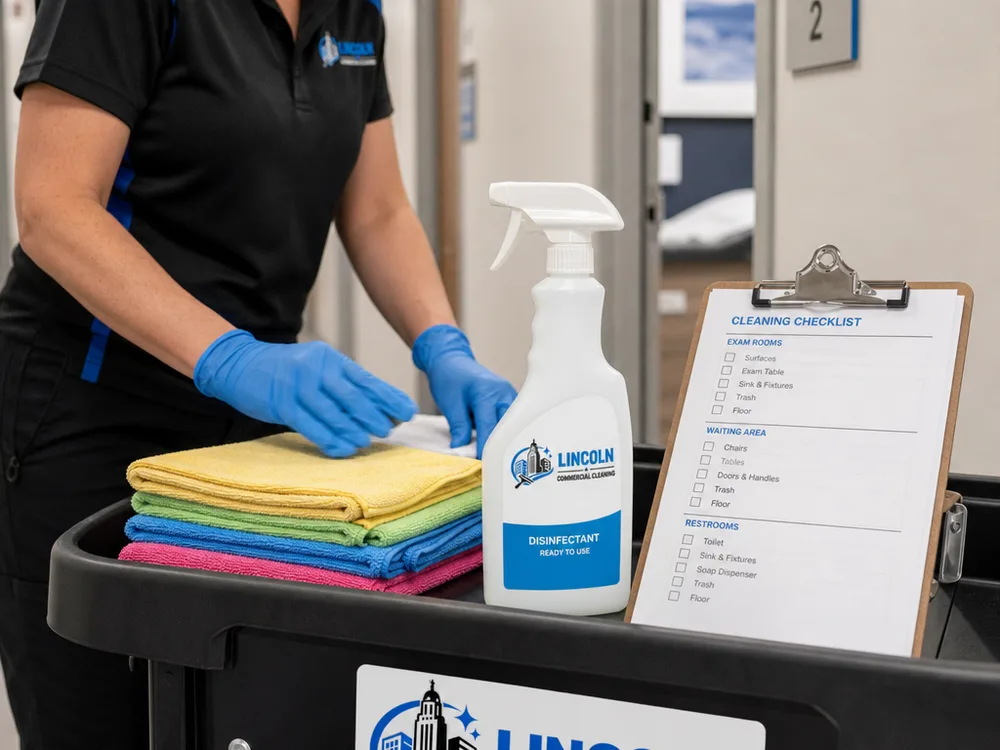
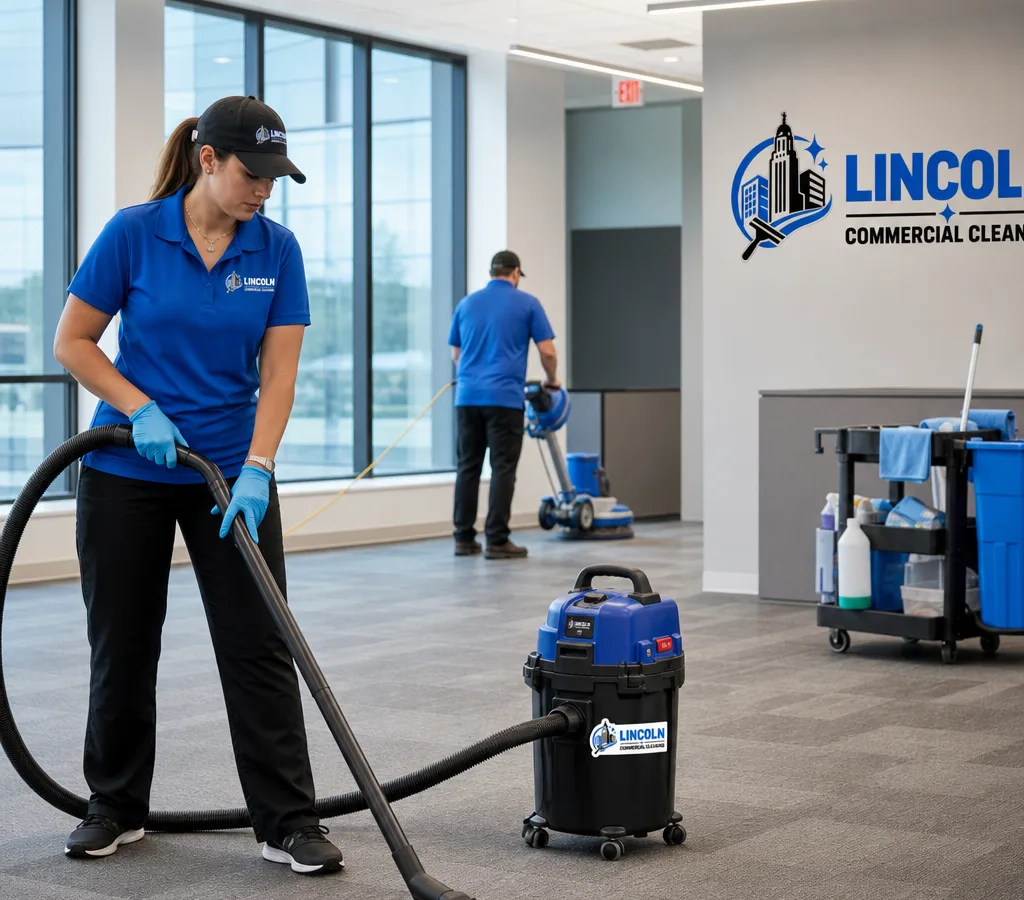
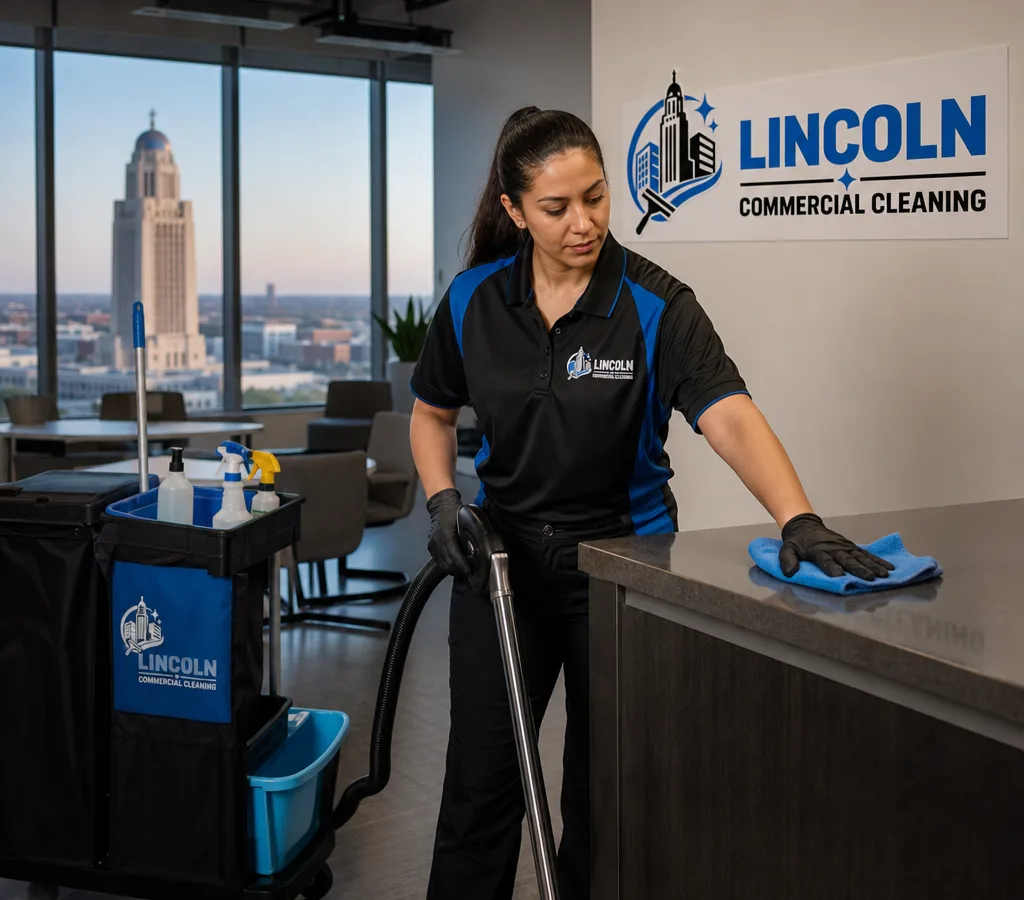
Visits are set outside appointment hours, usually after the last client or before the first, and a closed day often takes the heavier work. Entry and key arrangements are agreed in writing beforehand. Wet areas and floors are scheduled early in the visit so everything is dry before the first client arrives.
Owner questions
Salon owners usually want to know what happens to the hair, what happens to the product film, and how a visit avoids touching their tools and stock.
Stylists keep clearing clippings through the day, since that cannot wait for a scheduled visit. What a visit adds is the hair a broom never gets: baseboards, corners, station bases, chair wheels and under the furniture. The dividing line is written into the scope so neither side assumes the other is handling it.
Hairspray and powder leave a film that needs a cleaner able to break it down, applied to counters, mirror frames, shelving, fixtures and the floor. Wiping with water spreads it around instead. Surfaces that cannot take a stronger product are identified at the walkthrough and handled differently.
Tools, color stock, implements and retail inventory are left alone. Counters and shelf surfaces are cleaned around them, or after your team has cleared a station, whichever you prefer. Anything you want untouched is listed in the scope rather than relied on as understood.
They are, because a reclined client sees surfaces nobody else looks at: ceiling vents, light fixtures, shelf edges, the underside of a trolley. Those go on the task list explicitly, and the room is reset rather than merely cleaned. Linens and laundry stay with your staff unless we agree otherwise.
Bowls, surrounds, chair bases, floors and grout are cleaned and dried on each visit, since standing moisture is what causes problems in those areas. Equipment sanitizing follows your own procedure and your product requirements. Heavier grout and finish restoration is periodic work, quoted separately.
Book a studio walk
Tell us the station count, the services you offer and when the studio is quiet. A walk shows where residue is collecting, and a written scope and quoted frequency follow from it.
Request a quote
Send the building type, approximate size and the areas you want covered. A walkthrough is scheduled next, then a written scope and quote.