
A scope you can read
Every account starts with a written list of tasks, frequencies and rotation items. Nothing stays in a crew leader's head.
Serving Lincoln, Nebraska & surrounding areas
Mon–Fri 8am–6pm · Sat 9am–2pm
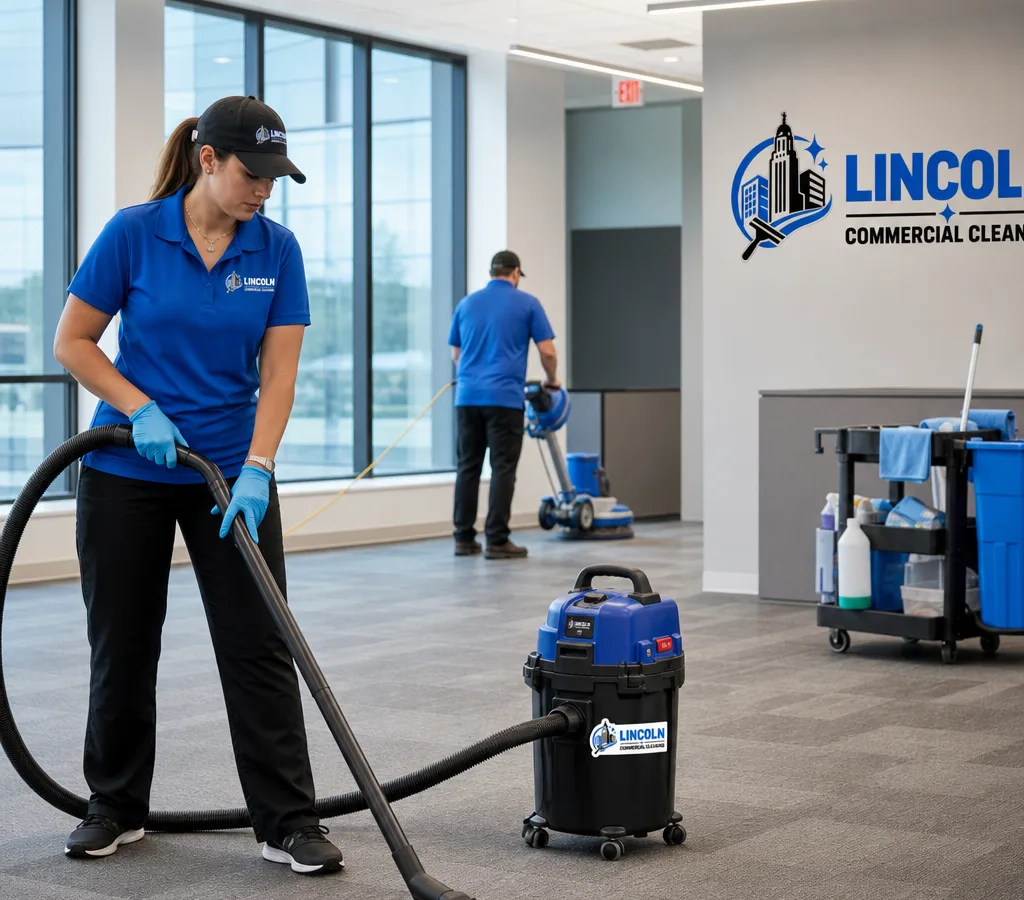
Service at a glance in Lincoln, Nebraska
Keep your building on a standing cleaning schedule with a written scope, a checklist the crew works from, and visits timed around your hours.
Service at a glance
Janitorial service is the ongoing arrangement that keeps a building presentable between bigger projects. Several parts of it are worth understanding before you sign.
Every account starts with a written list of tasks, frequencies and rotation items. Nothing stays in a crew leader's head.
Schedules get built around when the building is quiet, whether that means after close, before open or on a weekend rotation.
Soap, paper and liners get tracked as part of the visit so a dispenser is not empty on a Monday morning.
When something needs attention beyond the scope (a failing faucet, a stained ceiling tile), it goes in the service notes for you to act on.
On the checklist
Task lists differ by building, but a commercial janitorial route in Lincoln tends to hold the same core items with detail work layered on a rotation.
Fixtures, partitions, mirrors, floors and dispensers are cleaned and restocked on every scheduled visit.
Hard surfaces are swept and damp mopped, carpet is vacuumed, and edges get attention rather than only the open traffic lanes.
Liners are pulled and replaced, bins get wiped as needed, and waste goes to the dumpster or staging point you designate.
Door hardware, switches, rails, elevator buttons and shared counters are wiped with products matched to the surface.
Sinks, counters, tables, appliance exteriors and cabinet faces are degreased so food soil does not build up.
Vents, baseboards, partition tops, interior glass and chair bases are scheduled at intervals rather than nightly.
Best fit
A janitorial contract pays off where soil arrives daily and somebody is accountable for how the place looks to visitors and staff alike.
Reception glass, conference rooms, restrooms and breakrooms carry the impression a visitor takes away. A weekly or nightly route keeps them from drifting.
Shared corridors, entries and common restrooms need a predictable routine and service notes a property manager can forward to an owner.
Getting set up
Starting an account takes a couple of conversations and one site visit, after which the route settles into a rhythm your staff stops noticing.
We tour the building, note square footage, restroom count, floor types and the areas that cause complaints.
Tasks get sorted into every-visit work and rotation work, then matched to a frequency that fits the traffic.
Alarm codes, badge rules, elevator access and any restricted rooms are confirmed in writing before the first visit.
Early visits usually expose something a walkthrough missed, so the scope gets adjusted while the account is new.
Spot checks and your feedback keep the checklist honest, and the scope gets revised when your use of the space changes.
Alongside janitorial
Routine visits maintain a standard, they do not create one. Projects handled separately are what set the baseline and keep specialty surfaces in shape.
Most accounts open with a deep cleaning visit before the route starts, because a nightly checklist can only hold the condition it was handed. Buildings coming off a stretch of patchy service usually need that reset first.
Specialty work sits outside the weekly list. Floor care runs on its own calendar for stripping, recoating and extraction; window cleaning gets scheduled by exposure; post-construction cleaning follows a remodel; industrial cleaning covers warehouse and plant areas a standard office route is not built for.
Clinics and healthcare suites follow the medical office cleaning plan instead, which carries extra touch-point and waste handling detail. General commercial cleaning across the rest of a portfolio is the same unit as janitorial, described from the building's side rather than the schedule's.
Budget planning
Janitorial work is priced as ongoing service, so the useful number is a monthly or per-visit range rather than a single one-time figure.
Recurring commercial cleaning in Lincoln typically runs about $300 to $1,500+ per month, depending on the building and how often we are on site. A small office on a weekly schedule often lands around $150 to $400 per visit, while larger spaces with multiple restrooms, breakrooms and higher traffic can run $500 to $1,200+ per visit.
Several inputs move a quote inside that range: square footage, restroom count, floor type, trash volume, whether access is after hours, and the condition of the space at the start. First-time service on a neglected building costs more than maintenance on a space that has been kept up.
Scope decides the rest. Adding floor machine work, interior glass or day porter hours raises the figure, and trimming frequency lowers it. The exact cost is confirmed after a walkthrough and a written quote.
On site
Buildings reveal the quality of their cleaning in the same few places, and those are the places a janitorial route gets judged on.
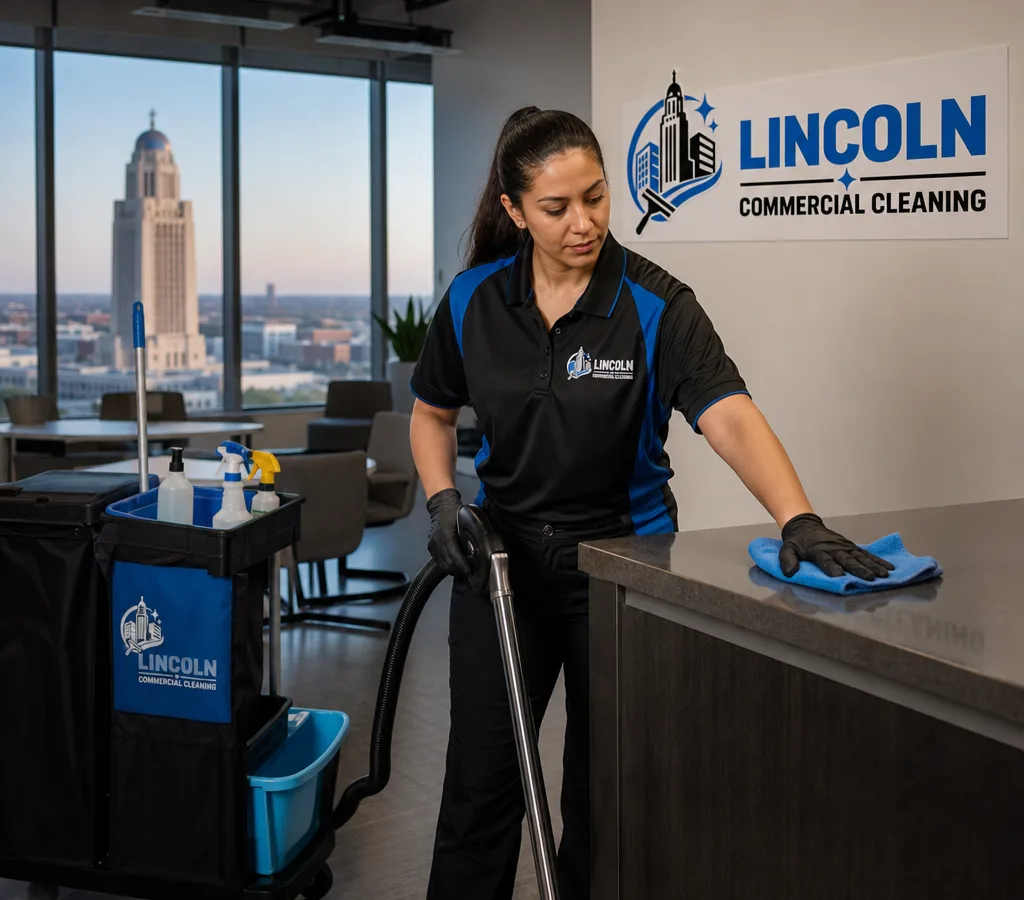
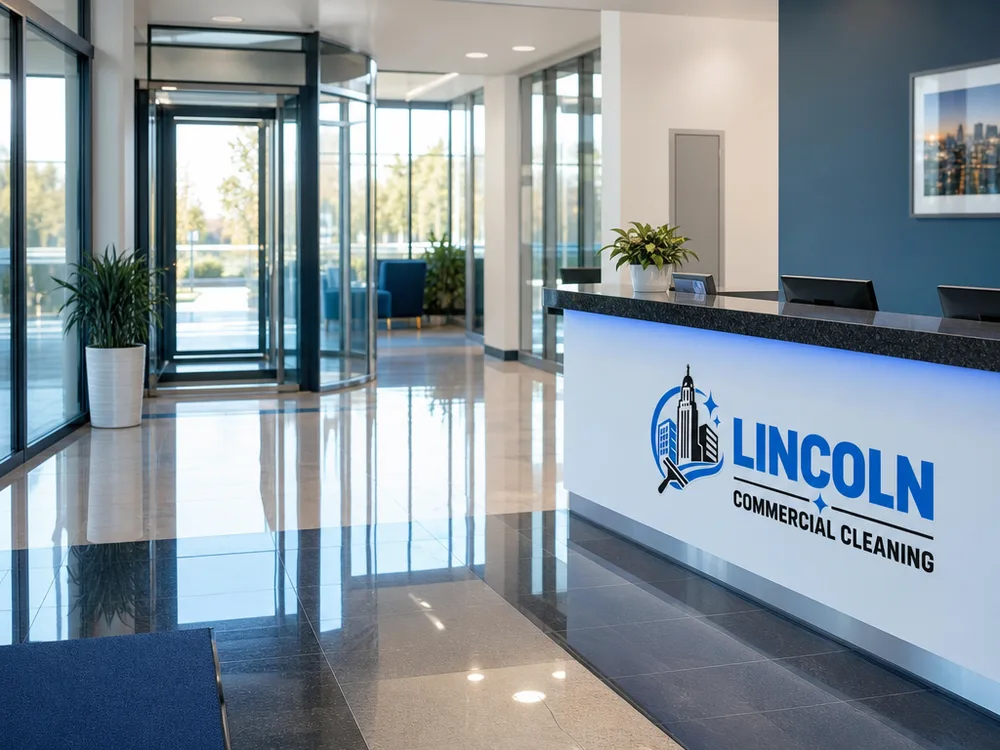
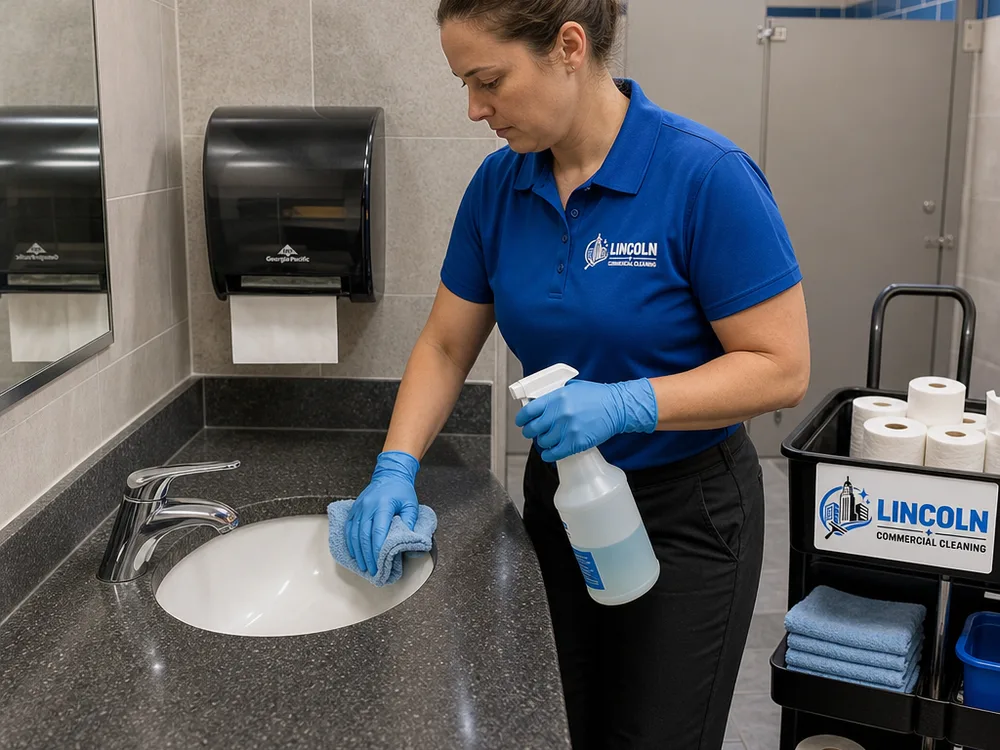
We staff accounts with consistency in mind, because a crew that knows your layout works faster and misses less. Coverage changes for vacations and illness, and anyone filling in works from the same written scope and checklist. Areas that need specific handling go on the account notes once you point them out.
Common questions
Facility managers comparing janitorial bids usually want the same handful of details confirmed before they choose, so those are answered plainly here.
Traffic decides this more than square footage does. A professional suite with light visitor flow is often fine weekly, while a building with public restrooms and a busy breakroom usually needs nightly or three visits a week. We suggest a frequency at the walkthrough and adjust it after the first month.
After-hours work is the norm for office accounts. Door, alarm and badge procedures get confirmed in writing before the first visit, along with any room that stays locked. Daytime visits are possible where a building cannot grant evening access.
Crews arrive with the chemicals, cloths and machines the scope calls for. Consumables such as soap, paper and liners can come from us or from your stock, whichever your purchasing prefers. Facilities with approved-product rules can have those products written into the scope.
Flag it and the next visit corrects it, with the checklist updated if the miss points at a gap in the scope. Repeat misses usually mean the frequency or the task list is wrong rather than the crew. That is a scope conversation, and it is better had early.
Scopes get revised as buildings change: a new tenant, a remodel, a department moving floors. Adding or removing tasks changes the quote, and the revision goes in writing before it takes effect. Seasonal add-ons can be arranged without touching the base agreement.
Start a schedule
Tell us the size of the building, the hours it runs and what currently gets missed. A walkthrough comes first, then a written scope and a quoted frequency that matches how the place is actually used.
Request a quote
Send the building type, approximate size and the areas you want covered. A walkthrough is scheduled next, then a written scope and quote.