
The finish is the wear layer
On a waxed floor, traffic abrades the coating rather than the tile underneath. Catching that early means a recoat instead of a full strip.
Serving Lincoln, Nebraska & surrounding areas
Mon–Fri 8am–6pm · Sat 9am–2pm
Surface and finish in Lincoln, Nebraska
Hard floors and carpet brought back by the method the surface actually needs, scheduled so the area is usable again when your doors open.
Surface and finish
Commercial floors fail in predictable ways, and the fix depends on which layer is damaged. That is the question a floor assessment answers first.
On a waxed floor, traffic abrades the coating rather than the tile underneath. Catching that early means a recoat instead of a full strip.
Burnishing, scrubbing, recoating and stripping sit on a scale. One step too light wastes a visit, and one step too heavy wastes finish.
Soil in carpet is suspended in fiber instead of sitting on a surface, so pre-treatment and extraction matter more than passes with a vacuum.
Coatings need cure time before furniture and traffic return, so the calendar gets set alongside the method rather than after it.
Methods we run
Each surface in a commercial building takes its own treatment, and most accounts end up using more than one of them across a single property.
Old finish is chemically removed down to the tile, then fresh coats are laid and allowed to cure before traffic returns.
Worn top coats are machine scrubbed off and replaced without a full strip, which suits floors caught before the finish is gone.
High speed pads bring gloss back to a sound finish and are the lightest way to keep a waxed floor looking maintained between bigger cycles.
Grout lines are agitated and the soil is extracted rather than pushed around, with sealing offered once the surface is dry.
Warehouse slab, polished concrete and sealed stone are scrubbed with pads and chemicals chosen for the finish they carry.
Traffic lanes are pre-treated, spots are worked individually, then hot water extraction pulls suspended soil and residue back out.
Hardest-wearing floors
Floor budgets concentrate where grit arrives on shoes and where the floor itself is part of how a business presents itself to a visitor.
Lobbies, corridors, retail sales floors and clinic waiting areas, where gloss and clean grout read as competence before anyone speaks.
Breakrooms, kitchens, warehouse aisles and loading areas, where grease, grit and tire marks wear finish faster than foot traffic alone.
Scheduling the work
Floor work comes with a closure window, which is why nearly all of the planning happens before the first machine is unloaded at your building.
We identify the material, check how much finish is left, and look at traffic patterns, seams and problem spots in daylight.
You get the recommended treatment, the hours it needs, and the cure time before the area can carry furniture and feet again.
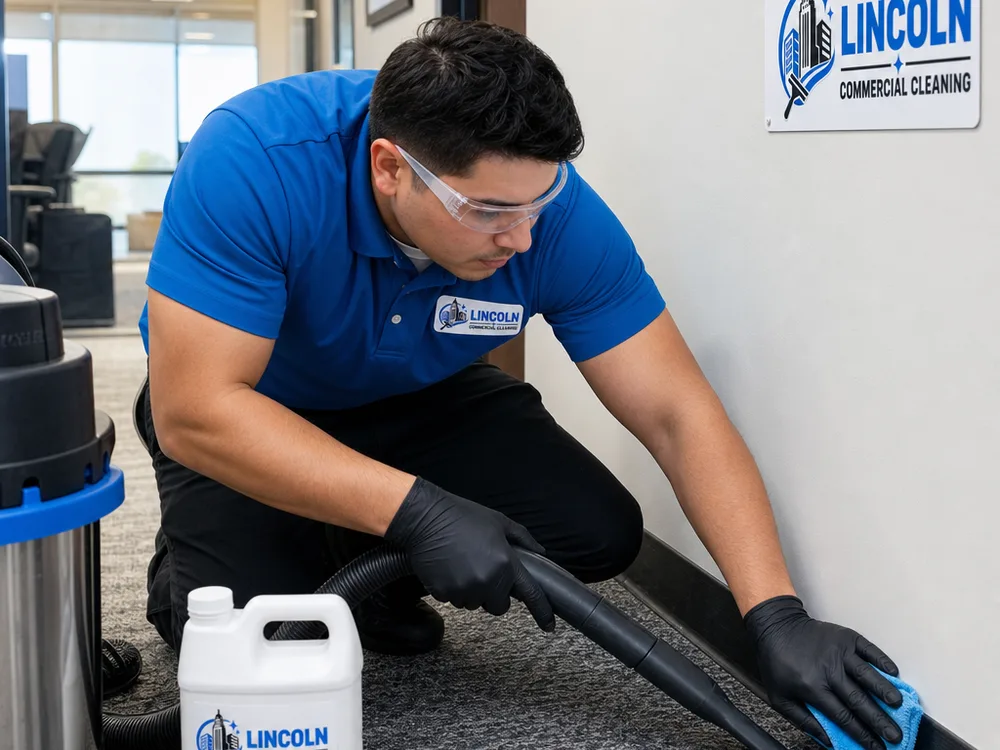
Furniture is moved or worked around as agreed, baseboards and transitions are protected, and signage goes up for anyone still in the building.
Stripping, scrubbing, extraction or burnishing runs in sections so a corridor is never blocked longer than it has to be.
Coatings dry undisturbed, furniture returns on schedule, and the finished area is walked with you to agree the maintenance interval.
Paired services
A refinished floor starts losing gloss from the first day of traffic, so what happens between projects decides how long the result actually holds.
Daily and weekly care belongs on a janitorial schedule: correct dust mopping, the right neutral cleaner, mats at the entries and prompt spill response. Finish dies fastest under grit left on the surface and under the wrong chemical.
Two projects pair naturally with floor work. Deep cleaning suits a building where the whole interior needs resetting and not only the floors, and window cleaning booked alongside a lobby refinish finishes the entry in one closure. Warehouse and plant slab work sits with industrial cleaning, which brings larger scrubbers and different chemicals.
Clinic floors get planned around the medical office cleaning routine, since exam rooms and waiting areas cannot both close at once. Buildings turning over after a remodel usually need post-construction cleaning before any finish goes down, because adhesive, film residue and fine dust will contaminate a fresh coat.
Cost of floor work
Floor projects are quoted by the job rather than by the month, since the method a surface needs changes the hours more than the area does.
The site's deep-cleaning band covers commercial interiors at about $0.20 to $0.60 per square foot, with small office suites often around $250 to $900+. Heavy floor work prices above that range, because stripping, refinishing and extraction carry machine time, materials and cure hours a detail clean does not.
Area is only one input. Material, how much finish is left, grout condition, furniture volume, the number of coats you want, and whether the space can close in one block or has to be staged all move the figure. Access and after-hours timing shift it as well.
Ongoing maintenance is a different unit: recurring commercial cleaning in Lincoln typically runs about $300 to $1,500+ per month depending on the building and frequency, and routine floor upkeep can be written into that schedule. Project work is quoted per project after a walkthrough, in writing before we book it.
Before and after
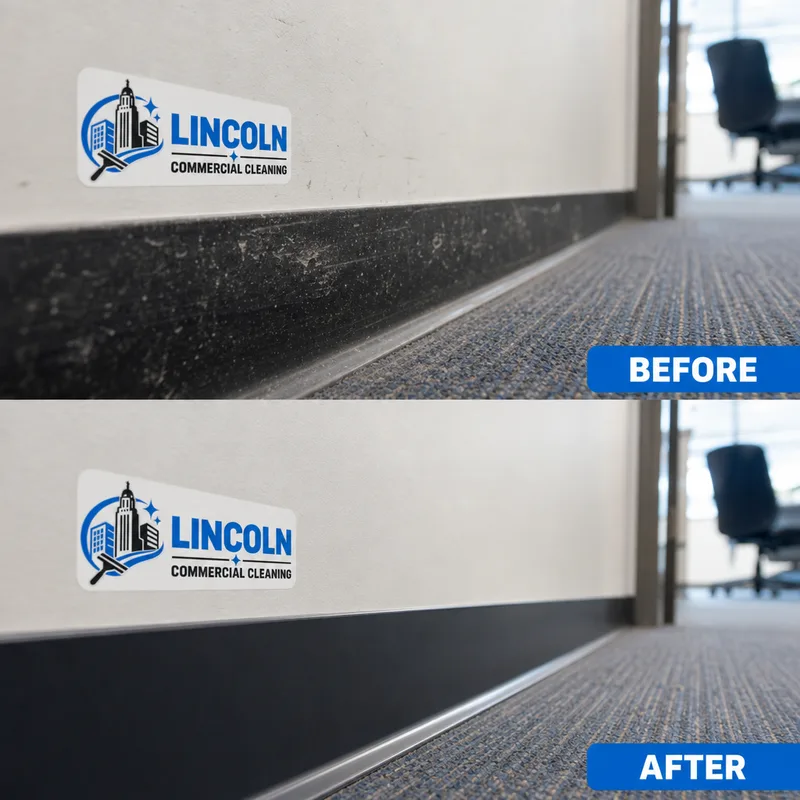
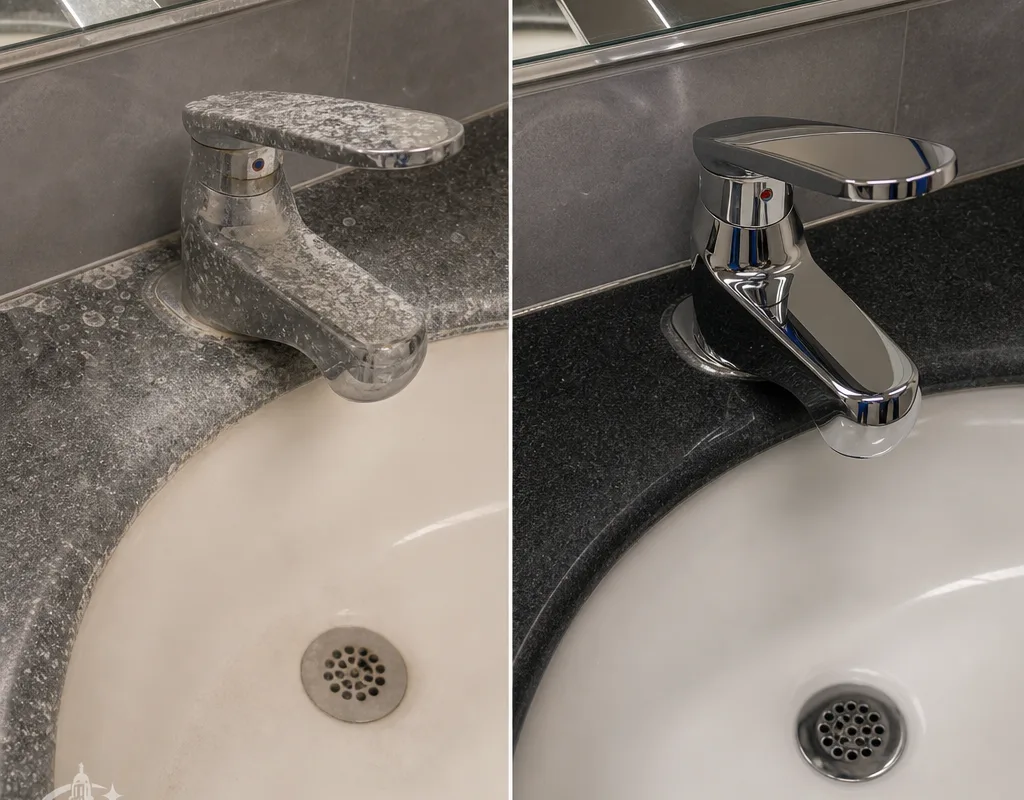
Floor results read clearest at the edges, in the grout, and along the lanes where traffic concentrates, rather than in the middle of an open room.

Light foot traffic is usually fine within a few hours of the last coat, though heavy furniture and rolling loads need longer so the finish can harden properly. The exact window depends on the product, the number of coats and the humidity in the building. You get that timing in writing with the quote so the closure can be planned.
Floor care answers
Nearly every floor conversation comes down to one decision: which treatment the surface genuinely needs, and how long the area can afford to be closed.
Stripping is the heaviest option and most buildings do not need it on a fixed cycle. With regular burnishing and a scrub and recoat when gloss drops, a floor can often go a long stretch between full strips. We look at the remaining finish and build the interval from that rather than from a calendar.
Overnight and weekend work is standard for floor projects, because cure time is the real constraint. A single corridor or room can usually be turned around in one night, while a large area gets staged across several. Sections are set with you so a route through the building always stays open.
Agitation and extraction remove soil held in the grout, and most dull grout is soil rather than damage. Grout dyed by a spill or eroded by wear will not return to its original color with cleaning alone, and we say so after testing a small area. Sealing afterward slows how fast it re-soils.
Tell us what your team can move and what should stay, and the quote reflects it. Desks, filing and heavy fixtures can be worked around with a slightly different result at the edges, or moved by us when that is written into the scope. Clearing more floor always produces a better finish.
Carpet sits in the same service, handled with pre-treatment, spot work and hot water extraction instead of pads and finish. Drying time is shorter than a refinish, but the area still needs airflow before furniture returns. Traffic lanes in heavy areas often want extraction more frequently than the rest of a floor.
Get floors back
Tell us the material, roughly how much of it there is, and when the area can be closed. We will assess the finish, recommend the lightest method that will actually work, and quote the project in writing.
Request a quote
Send the building type, approximate size and the areas you want covered. A walkthrough is scheduled next, then a written scope and quote.