
Grease travels
Vaporized cooking oil settles well past the line: on walls, shelving, ceiling tiles and the floor of a dry store. Degreasers and dwell time do what wiping cannot.
Serving Lincoln, Nebraska & surrounding areas
Mon–Fri 8am–6pm · Sat 9am–2pm
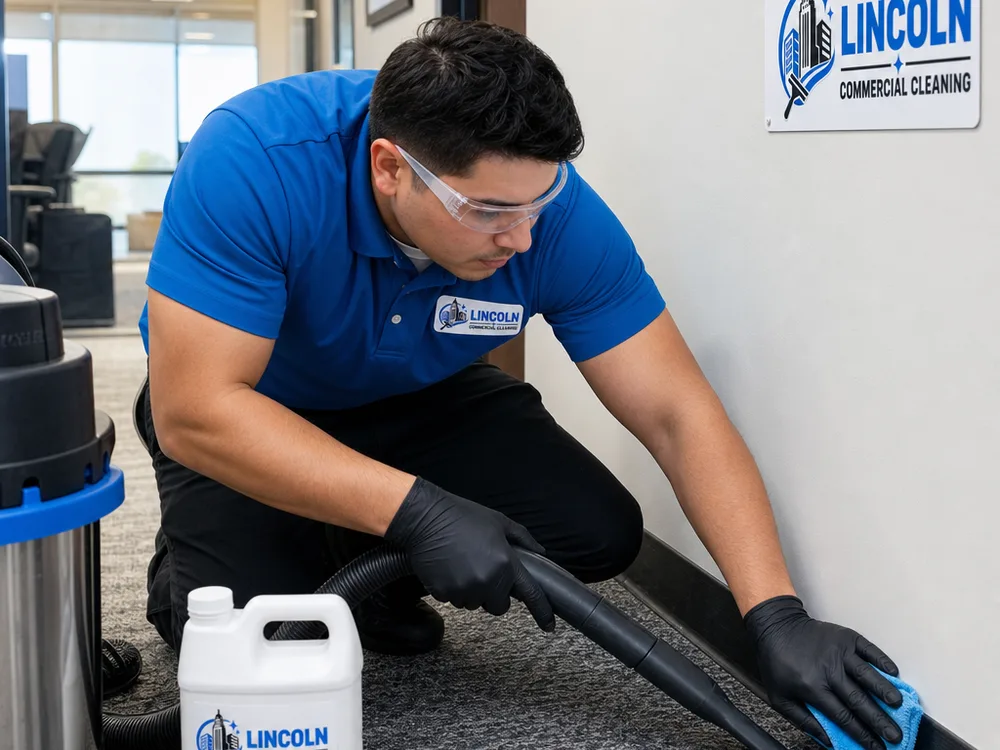
Kitchen and dining room in Lincoln, Nebraska
Kitchens, dining rooms and back-of-house areas cleaned on a schedule that starts once your last table has left for the night.
Kitchen and dining room
A restaurant works as a kitchen and a dining room under one roof, and each half soils differently. Grease moves through one, and guests sit and judge the other.
Vaporized cooking oil settles well past the line: on walls, shelving, ceiling tiles and the floor of a dry store. Degreasers and dwell time do what wiping cannot.
Booth seams, table bases, window ledges and the floor under a banquette are where a room starts looking tired, long before the tabletops do.
Quarry tile and the grout between it trap grease and food soil, so a mop spreads film instead of lifting it. Agitation and extraction are what change the surface.
Closing duties cover what a cook can get to in ten minutes. Hard floors, high shelving, vent grilles and wall panels need machine time and a crew that is not also closing out.
Kitchen task list
Menus and layouts differ, so every scope gets written per site. The tasks a Lincoln kitchen and dining room usually carry still group in a recognizable way.
Quarry tile and grout are degreased, agitated and rinsed so built-up film comes off rather than moving to the next low spot.
Equipment exteriors, stainless legs, shelving, cart wheels and the wall behind the cookline are degreased on the agreed frequency.
Table bases, booth seams, chair legs, railings, ledges and baseboards are cleaned with the floor rather than around it.
Fixtures, floors, partitions, vents and dispensers are cleaned and restocked each visit, with grout detail on a rotation.
Floors, walls, splash zones and the space under and behind machines are cleaned where equipment can be accessed safely.
Cans are washed out, liners replaced, and the pad or corral around the dumpster is swept so spills do not sit there between pickups.
Dining formats served
Food service in Lincoln runs from counter-service storefronts to full-service dining rooms, and a cleaning plan follows volume and layout far more than cuisine.
Dining rooms, bar tops and wells, server stations and guest restrooms, where a visit has to finish before the first reservation the next day.
Smaller footprints with heavy daytime traffic, open kitchens in guest view, and display cases that need glass work as part of the routine.
Closing-time routine
Food service leaves the narrowest window of any building type we clean, which is why the schedule gets built backward from the hour your doors open again.
We tour the site late in a shift to see the kitchen as it actually ends a night, not as it looks at eleven in the morning.
Your closing duties and our visit get written side by side so nothing is cleaned twice and nothing falls between the two lists.
How a crew gets in, and how the alarm is handled, are confirmed, along with the latest hour a crew can finish before deliveries or prep begin.
Floors, line surfaces, dining room and restrooms are worked in an order that keeps wet floor away from the path staff will use first.
Early weeks show whether the frequency fits the volume, and the task list gets revised while an account is still new.
Related cleaning work
A nightly or weekly visit holds a standard. Heavier work on floors, glass and grease-laden surfaces runs on its own calendar and gets quoted separately.
Grout and quarry tile eventually need more than a scheduled degreasing, which is where floor care comes in for deep agitation, extraction and sealing. Dining room carpet and entry matting fall to the same service.
Kitchen exhaust hood interiors and duct runs sit outside this scope and are arranged with a specialist trade. Storefront glass, display cases and entry doors belong to window cleaning, which matters most where a sidewalk looks straight into the room.
Reopening after a remodel or an equipment install brings construction dust and adhesive, and that is post-construction cleaning rather than routine work. Where a restaurant has fallen behind across the whole building, deep cleaning resets it before a schedule takes over, and the general commercial cleaning service covers any other property in the same ownership.
Restaurant cleaning costs
Food service is priced as recurring work, so the number worth comparing between bids is a monthly figure or a per-visit rate, not a one-time total.
Monthly figures for scheduled commercial cleaning in Lincoln usually fall between about $300 and $1,500+, set by the size of the room and the number of visits. Smaller rooms on a weekly visit often sit around $150 to $400 per visit, and a bigger operation with several restrooms, a breakroom and steady traffic can reach $500 to $1,200+ per visit.
Covers and hours move a restaurant quote more than square footage does. How much of the floor is quarry tile, whether the kitchen closes fully, bar service, late programs in a private room, and the condition of the grout at the start all feed into it.
Heavy grout restoration and degreasing above the cookline are quoted separately after the walkthrough. The recurring figure is confirmed in writing once scope and frequency are agreed.
In the dining room
Guests do not inspect a kitchen, so the room they sit in carries the impression: the floor along a banquette, the table base, the ledge beside a window.
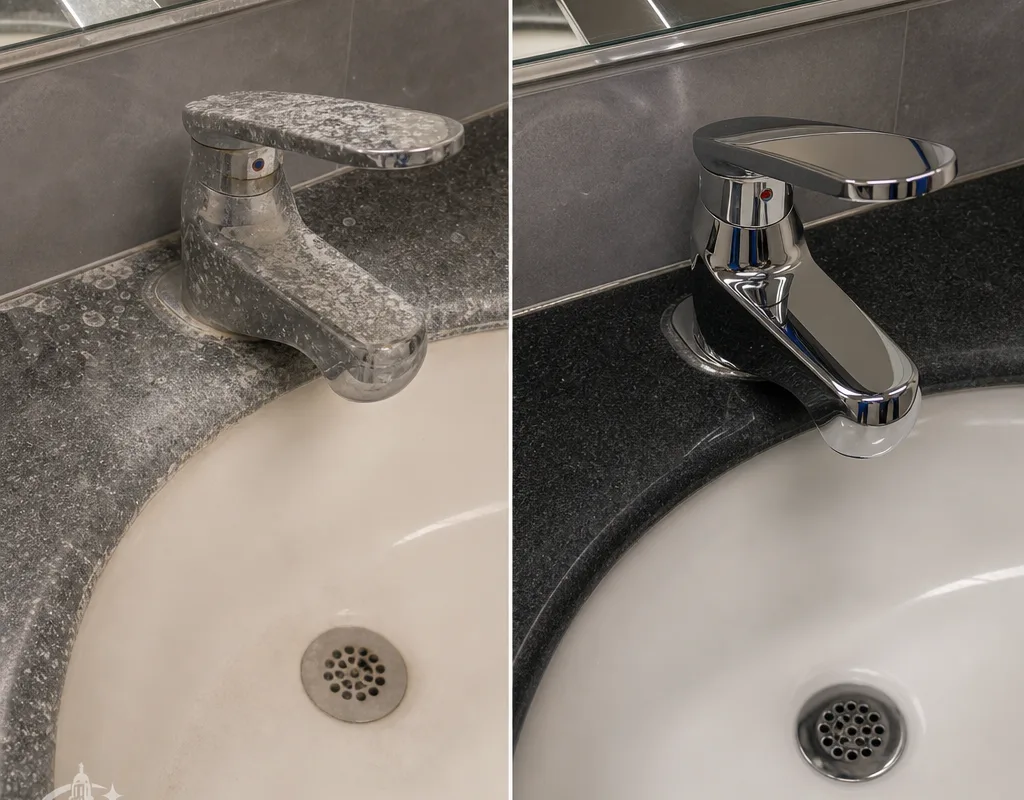
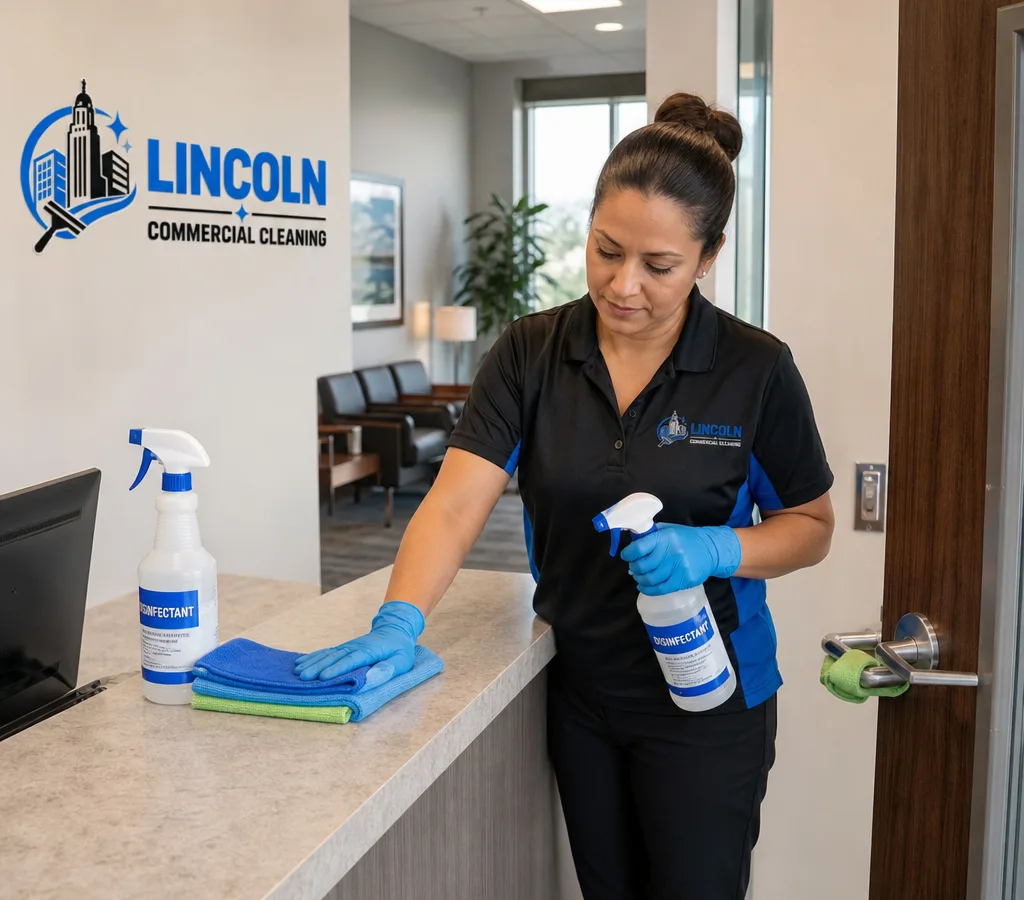
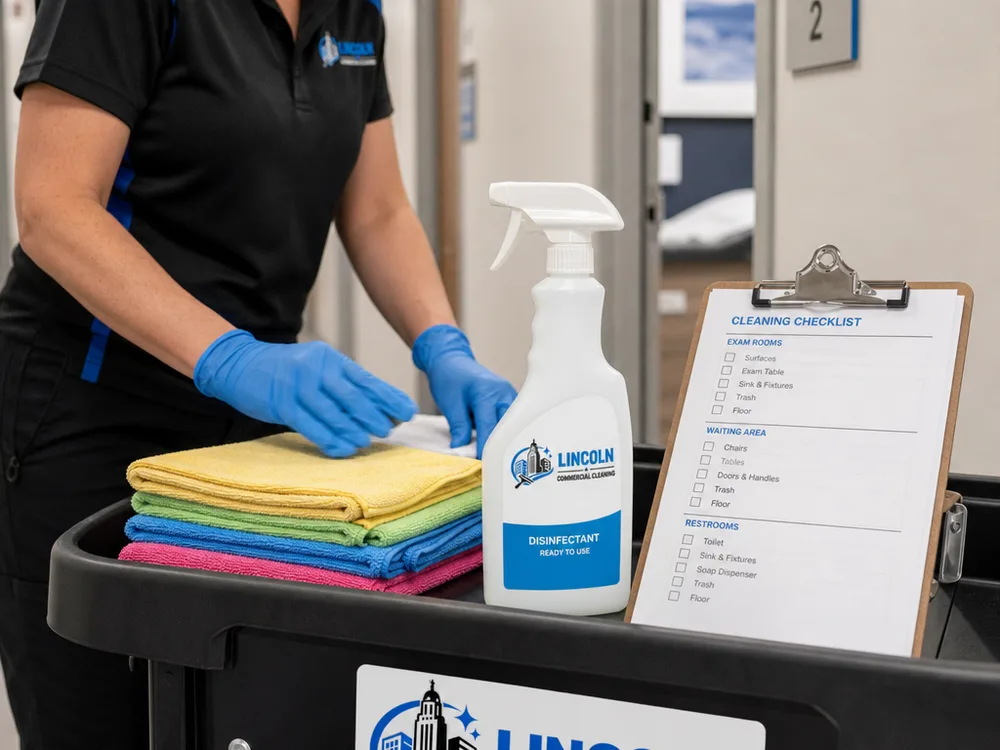
Late-night and early-morning visits are the normal arrangement, because the floor and the line both need to be clear. Key, alarm and alley-door handling is agreed in writing before the first visit, and the crew finishes before deliveries or prep start. A restaurant that closes fully one day a week sometimes prefers the heavier work on that day.
What operators ask
Most questions from restaurant owners come back to timing, where their closing staff stops and a visit begins, and what actually happens to the grease.
Hood filters, the visible exterior and the wall and ceiling around the canopy are cleaned on the agreed frequency. The interior of the hood, the plenum and the duct run are a separate specialty trade with its own equipment, so that work gets arranged rather than absorbed here. The boundary is written into the scope so nothing is assumed.
Both lists get written at the walkthrough. Staff generally keep the nightly line and prep surfaces, and the visit takes floors, restrooms, the dining room and the rotation items that need machine time. Where a kitchen is short-staffed, more of that can move across, and the quote reflects it.
Volume decides this. A busy full-service kitchen usually wants nightly or near-nightly attention on floors and restrooms, while a cafe with a short menu can often hold on fewer visits a week. A frequency gets proposed after the walk and adjusted once the pattern is clear.
Dining floors are worked after the last table, in sections, so a wet area is never the route anyone walks in on. Carpet extraction and grout work need drying time, which is why those land on a slower night or a closed day. That timing goes into the plan rather than being decided on the night.
Shelving exteriors, floors and the space under racking are cleaned on the agreed rotation, with product moved only when your team has cleared it. Anything inside a cooler that has to be emptied first gets coordinated so stock is never left out. Freezer floors are handled with dry methods rather than mopping.
Book a kitchen walk
Tell us your covers, your closing hour and what currently gets left behind. A walk late in a shift shows the real condition, and a written scope with a quoted frequency follows from it.
Request a quote
Send the building type, approximate size and the areas you want covered. A walkthrough is scheduled next, then a written scope and quote.